

- Details
-
 By Santosh Zope
Discover why minimal maintenance design is critical for long-term durability in packaging automation. Learn how maintenance downtime impacts OEE and how low-maintenance equipment helps optimize both CAPEX and OPEX.
Maintenance as a Key Factor in Packaging Equipment Performance
In any packaging automation environment — whether in the pharmaceutical, food and beverage, cosmetic, or chemical industries — the relationship between maintenance and equipment performance is critical. While maintenance stops are often viewed as losses in availability, and therefore in Overall Equipment Effectiveness (OEE), they are essential to ensure machine reliability and extend service life.
This apparent contradiction is resolved when companies shift from reactive maintenance to a strategic investment mindset — one that recognizes how design choices influence downtime, spare part consumption, and ultimately, OPEX.
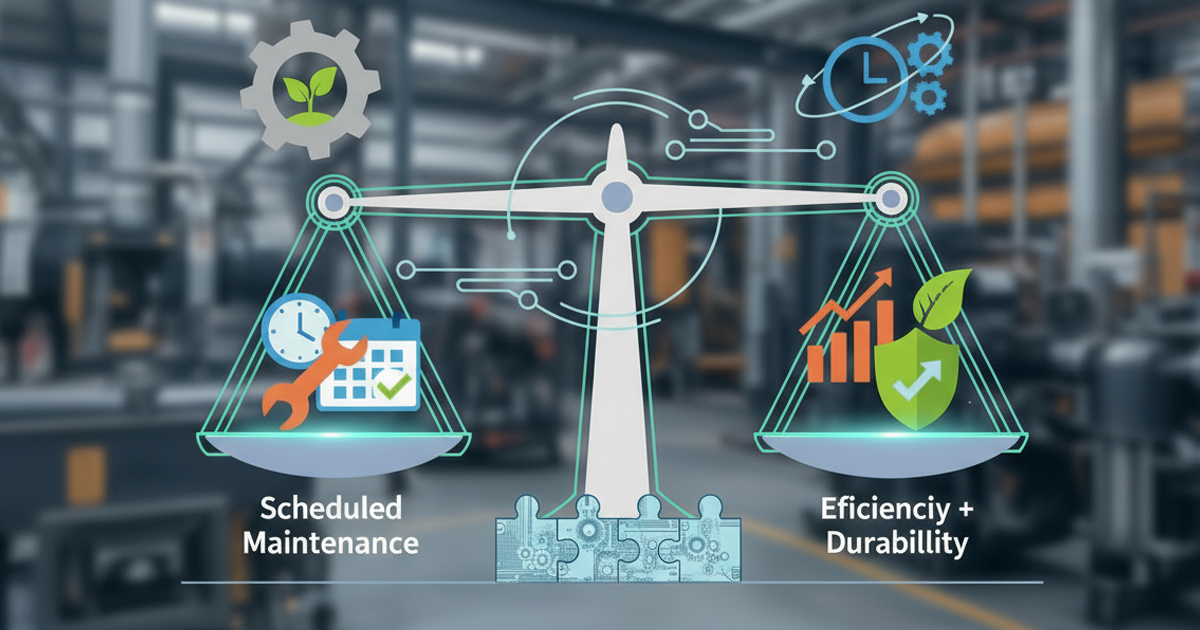
Scheduled Maintenance and Its Impact on OEE
The Maintenance Dilemma
Every maintenance pause, even if planned, represents a reduction in availability — one of the three pillars of OEE. Yet deferring maintenance increases the risk of unplanned breakdowns, which cause longer disruptions and more costly interventions.
Older machines, in particular, require more frequent attention. Wear accumulates, parts degrade, and system performance declines unless carefully managed. This leads to a growing need for interventions and replacement parts — elevating operational costs over time.
Simplicity as a Strategic Advantage
The best-performing packaging lines prioritize equipment simplicity as a design philosophy. Fewer moving parts, minimal use of belts or hooks, and intuitive mechanical layouts make for systems that are easier to maintain. This reduces the need for technical intervention and lowers both the time and cost of maintenance activities.
CAPEX vs. OPEX: Thinking Beyond the Purchase Price
When selecting new packaging machinery, many organizations focus primarily on CAPEX (Capital Expenditure) — the upfront cost. However, the total cost of ownership over 5 to 10 years is shaped more by OPEX (Operating Expenditure): energy consumption, spare parts, labor, and unplanned downtime.
A long-term view that includes both CAPEX and OPEX helps companies identify equipment that offers greater durability and lower lifetime costs. In this analysis, low-maintenance design becomes a decisive factor.
Designing for Durability and Operational Efficiency
Across sectors, packaging equipment that works with gravity, air flow, or simplified motion systems tends to require less intervention. For example:
- In pharmaceutical packaging lines, where hygiene and uptime are critical, minimizing interventions avoids cross-contamination risks and ensures compliance.
- In food and beverage environments, high-speed lines benefit from equipment with self-cleaning features and tool-free access.
- Cosmetic packaging machinery often faces a wide range of formats and shapes; simplified changeovers reduce human error and maintenance needs.
- Chemical bottle handling equipment must be resistant to corrosive substances and designed for easy decontamination.
These characteristics — robustness, minimal part wear, and ease of cleaning — contribute to long-term reliability.
POSIMAT: A Case Study in Maintenance-Conscious Design
Among manufacturers, POSIMAT stands out for its commitment to simplicity and durability in bottle unscrambler solutions. The company's approach avoids unnecessary complexity: using geometry, gravity, and air to move bottles, with no hooks or belts or other parts that cause missadjustment or failure. This results in equipment that requires minimal intervention and reduces spare parts consumption.
Whether it’s a high-speed bottle unscrambler, a robotic bottle unscrambler, POSIMAT systems are designed to support long-term performance with low OPEX. This design philosophy aligns perfectly with companies seeking the best bottle unscrambler manufacturer in the context of packaging machinery globally.
By combining high efficiency with reduced maintenance needs, POSIMAT demonstrates how packaging technology can support both availability and cost-effectiveness — helping operators around the world balance OEE, durability, and return on investment.
Transparency statement: This article was written by the Posimat team. Images and editorial language review have been optimized using artificial intelligence tools.