

- Details
-
 By Santosh Zope
When you’re evaluating a bottle feeding and handling line, especially a high-speed bottle unscrambler or orientation system, you’ll often hear about using a puck-line (also called a puck-handling system). A puck-line can be a smart move for the right applications: it delivers excellent stability and allows you to handle challenging bottle shapes. But it also brings investment and complexity.
In this article, we’ll dig into the pros and cons of a puck-line, anchor the discussion in key sectors like pharmaceuticals, cosmetics, food & beverage, and chemicals, and show how POSIMAT addresses both sides of the equation.
What is a puck-line and why consider it?
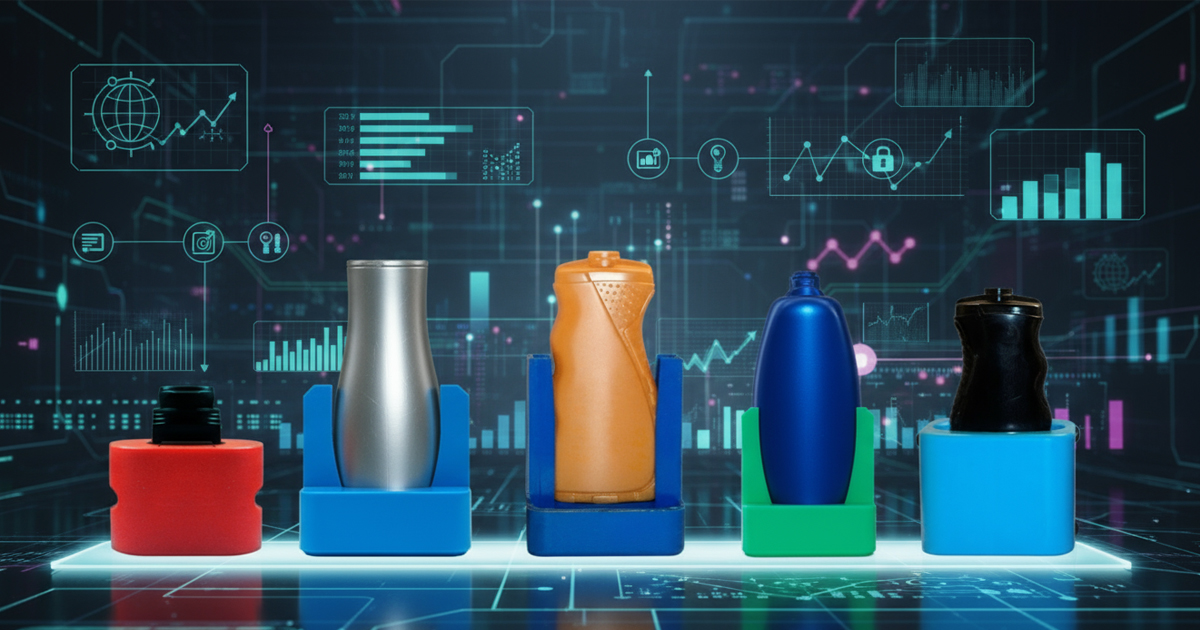
In packaging automation, a puck-line uses work-piece carriers (“pucks”) into which bottles (empty) are inserted. These pucks then travel through the line — from unscrambler/orienter, through filling, capping, labelling, inspection — and finally finished bottles are removed with a de-pucker system. Using a puck handling system provides consistent handling even for odd shapes and integrates well with an automatic bottle unscrambler.
You’ll find puck-handling technology in multiple sectors: pharmaceutical bottle unscrambler lines (where glass pharma vials or bottles demand precision), cosmetic packaging machinery (often irregular shapes), food & beverage bottle unscrambler lines (high-speed PET loads), and chemical bottle handling equipment (aggressive shapes or unstable containers).
For manufacturers seeking the best bottle unscrambler manufacturer or high-performance packaging machinery, whether in Europe, the USA, or globally, implementing a puck-line system can be a strategic move to enhance automation efficiency — depending on the specific needs of the project.
The Pros of using a puck system on a high-speed bottle unscrambler line
Minimising format-changes on filling, capping, labelling machinery and conveyors
When you insert bottles into pucks, the external footprint of the puck carrier remains constant even if the internal bottle geometry changes. That means your downstream filling, capping, and labelling machinery and conveyors don’t need re-tooling when you change formats.
This reduces change-over time and tooling cost — a big plus when you manage multiple formats or need frequent format shifts, reducing downtime as well related to misadjustments or human error.
High speeds and guaranteed bottle stability
At high throughput rates (such as in food & beverage or large-scale cosmetic lines), the puck ensures each bottle sits firmly, whether empty or full. This is especially critical when bottles have unstable bases, tottle bottle shapes, or curved sides. The puck provides essential support, enabling higher speeds while maintaining consistent product handling and line reliability.
Ability to handle challenging containers
This is where puck-lines show their value. If your bottles have non-standard shapes — such as bottom taps, irregular bases, or strongly curved sides — inserting them into pucks is often the only reliable way to maintain orientation and line integrity. Without pucks, many of these innovative bottle designs would not be feasible on automated lines.
The Cons (and what to watch)
More investment and extra machinery
A puck-line typically requires a bottle unscrambler compatible to work with pucks at the front, and an extractor at the end of the line. This adds capital cost, requires more floor space, and introduces greater mechanical complexity to the system.
More time for format-changes, puck inventory, and flow concerns
Although the external shape of pucks stays consistent, changing formats requires switching puck types though requiring minimal operator know-how. This adds time to change-over operations. You must also properly size and manage your puck inventory — too few pucks in circulation can halt production and reduce overall equipment efficiency (OEE).
Need for correct design and bottle insertion precision
Every bottle and puck combination is unique. Poorly designed systems or inaccurate bottle insertion into the puck can lead to issues in filling, capping, or labelling — such as misalignment, tipping, or improper sealing. Therefore, thorough engineering design and validation are essential before implementation.
How POSIMAT addresses these trade-offs
At POSIMAT, we understand that puck-lines offer great potential — but only if implemented with precision. We provide puck-line feeding systems for empty bottles that integrate seamlessly with our high-speed bottle unscramblers and downstream automation.
For production lines with frequent format changes, POSIMAT offers advanced systems such as the POSIFLEX rotary change system, and robotic unscramblers like COMPACTBOT and POSIROBOT. These allow for automated, efficient format shifts without manual intervention — increasing uptime and reducing operator workload.
Additionally, POSIMAT works closely with customers during the design phase to ensure each bottle and puck configuration is fully validated before launch. Accurate puck feeding and bottle insertion are critical for smooth line performance, especially in complex applications.
By choosing POSIMAT — recognized as one of the most experienced bottle unscrambler manufacturers for puck lines, trusted in packaging automation lines globally — you gain not only reliable machinery, but a full technical partner for your puck-handling project.
Conclusion: Is a puck-line right for your next packaging automation project?
In summary: if your line runs at high speed, handles complex or unstable containers, or requires flexibility in design, a puck-line can bring significant advantages — from stability and speed to expanded container design possibilities. However, you must weigh these benefits against the added cost, complexity, and operational requirements.
Key decision factors include: number of bottle formats per year, container geometry, line speed, available budget, and how well your system is dimensioned for puck flow.
If you’re exploring packaging automation in Europe, bottle unscramblers in the USA, or global projects requiring proven unscrambling technology, POSIMAT is ready to support you with expert solutions in both standard and puck-line configurations.
Transparency statement: This article was written by the Posimat team. Images and editorial language review have been optimized using artificial intelligence tools.